

When I first fell in love with photography it was on film, processing images in my own darkroom. The analogue medium really makes you appreciate that photography is actual magic.
These days I very rarely shoot film, although I’d love to do it more often. There’s no doubt that in this digital world the cost of film and processing is a hard justification. So why would anyone shoot on film in this day and age?
I think my love of film is very similar to the reason I collect records. There’s definitely something to be said for a simple, analogue relationship – especially for someone like me who spends every waking hour in a very digitally-focussed bubble. But it’s more than that. For me a change of medium really changes the way I experience something.
The beauty of analogue in a digital world
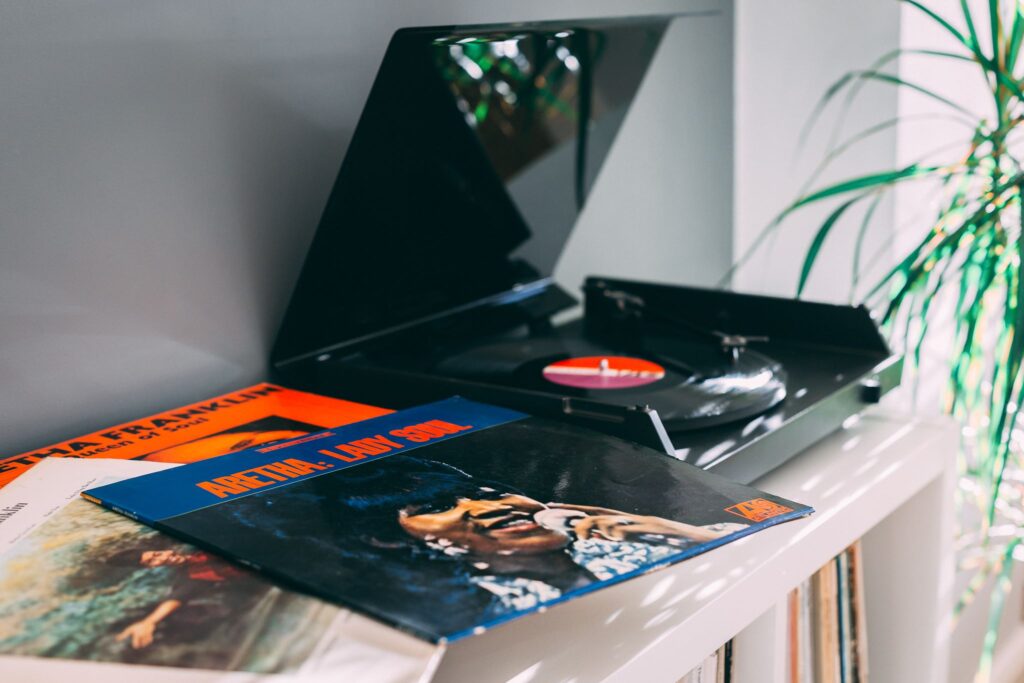
When I put on a record I listen to music in a completely different way. In the age of algorithm-powered personalised dynamic playlists, a song is a throwaway commodity. With a record I listen in the form of an album. Listening to a record you remember the beauty of the ebb and flow between tracks. I appreciate the fact that the sum is larger than its parts. I feel like I’m closer to understanding the artist’s vision.
As well as appreciating the work in a different way I’m also learning to embrace the imperfections. The crack and hiss. I feel far more closely connected to the music than I ever do through Spotify.
How does listening to records relate to film photography?
Film photography gives me the same kind of feeling. When shooting digital I’m used to working fast, especially when I’m shooting family photography. Children run around, subjects are hard to track. I need my equipment to work fast and efficiently. I have to be ready to shoot in a moment and react instantly to changes around me.
Analogue changes everything. Loading a film gives a very definitive start point. It’s like putting on the record. I’ve chosen to spend this quality time. The film and I will spend 24 to 36 frames together. I have to think carefully about how I choose to use them.
My muscle memory from using my Canon EOS 5D Mark III is gone. Controls, while familiar, are positioned slightly differently. Mechanical switches resist my touch and lenses require my intervention to focus. The medium forces me to slow down, to think and to consider what I choose to shoot.
By stripping the tool back to its simplest form you rely less on microchips and more on intuition. I find myself adjusting exposure more instinctively and coming to terms with the fact that I won’t always get it right. That’s ok though. For me, shooting film photography is less about the result and more about the experience.
Shooting on film doesn’t always go to plan
For those that follow me on Facebook, you’ll have seen me post recently about a quirky little Fujica Half Frame camera my Dad found in a drawer (along with his original 1969 receipt!)

My little boy has a real fascination with my cameras so I thought it would be fun for us to put a roll of film through and try it out! My usual film of choice would be Ilford HP5 400. There’s something about the grain, contrast and general aesthetic that I really love. However, the metering presets on this little Fujica only went up to 200. I didn’t really fancy having to mentally compensate each exposure so for simplicity I picked up a roll of Fomapan 200 instead. Ellis was pretty excited to give it a go!
Sometimes old equipment lets you down
Unfortunately we ran into a problem pretty quickly. As we were shooting the advance leaver started getting stiffer. Not a good sign. It turns out the film hadn’t taken to the spool correctly and had slipped. With each frame advance it got more and more jammed until the poor thing was completely clogged.

Eventually we had to bite the bullet and open the back, ruining the film and revealing the mess inside. The film needed to be cut out with a scalpel. Not pretty.
More disappointingly, it seems in the process of jamming the camera a small cog somewhere broke meaning the advance mechanism only partially worked. Film wouldn’t advance and any attempt to shoot would result in the same jam.
Time for plan B
Ellis was pretty disappointed we had to bin our film so I bought another one and popped it into my Canon FX instead. We took this one out with us on a couple of frosty walks.

Film photography isn’t instant (and can disappoint)
It’s pretty hard to explain to a 4 year old that you can’t see a photo the second you take it. Explaining that we had to finish the whole film, pack it up, send it off and wait for it to come back was absolutely baffling for him.
After a long wait a little ding on my phone announced that my scans were ready to download (a first for me as I usually order prints and in itself a strange combination of old and new). At this point I realised that the thrill of seeing the results is still as strong as it was when I was a child. Digital really isn’t the same.
A slightly unnerving note from the developer:
“Underexposed”
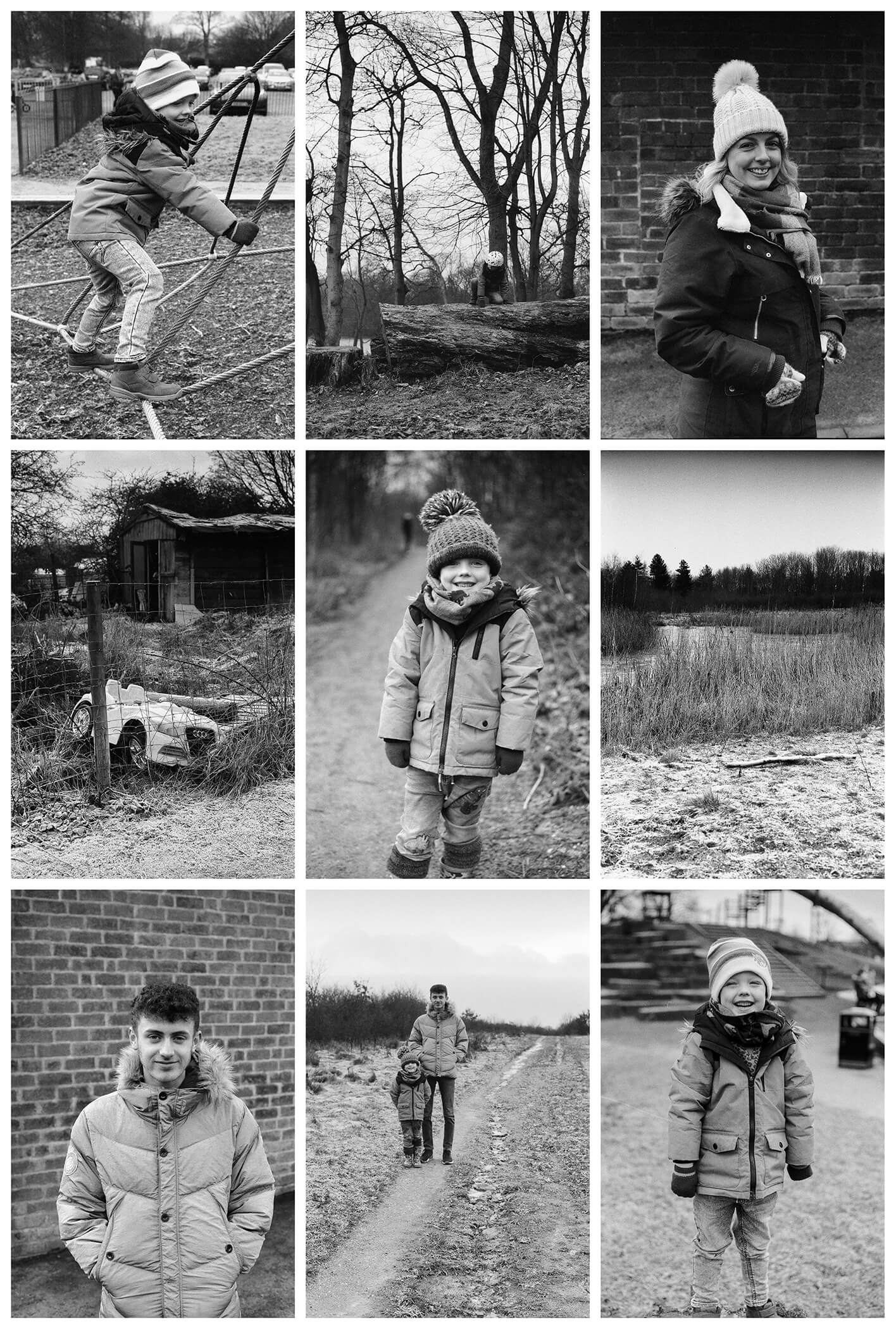
He wasn’t wrong! The film was pretty poor. I know from previous experience that the meter in this camera is reasonably reliable so I think the fault here lay with me. I was a bit ‘loose and fast’ with this roll, relying on the ‘Sunny 16 Rule‘ a lot of the time. Clearly I didn’t read the conditions as well as I thought I had. Some of the exposures were woefully out.
I also saw some light leakage across quite a few frames which I’ve not seen from this camera before. The problem with film photography is there are a lot of variables – I was using a new type of film, at a different film speed than I usually shoot. I had it processed somewhere new. I wasn’t metering quite as strictly as I may have done. Who knows what combination of factors resulted in the poor results but Ellis’ review of the images was pretty fair:
“Well those aren’t very good!”
Making the best of what you have
All wasn’t completely lost though. I pulled the scans into Lightroom to see if I could save anything. I usually shoot RAW so I had quite a bit less flexibility than I’m used to but using the histogram and tone curve tool I was able to pull back a few usable images.
Film photography – The takeaway
Going back to my vinyl comparison there’s a cartoon I’ve seen shared many times that I think sums this up better than I can:
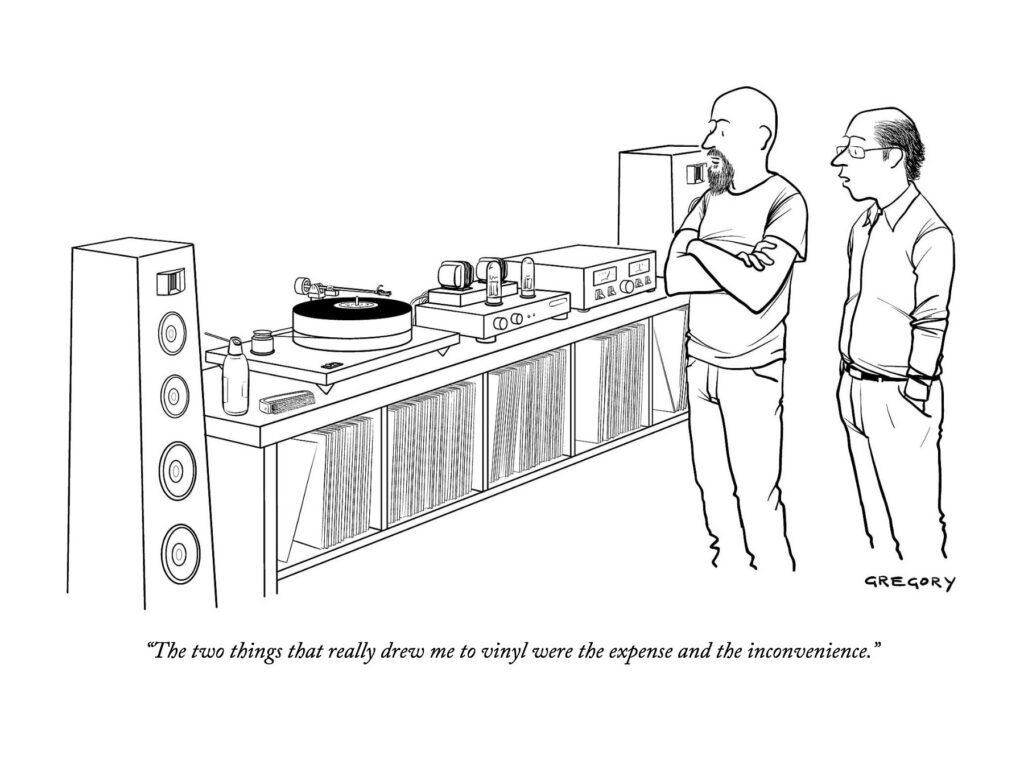
As I said, I feel there are a lot of similarities between my love of records and my love of film photography. Analogue is slow, cumbersome, unpredictable, inconvenient and expensive.
And I absolutely love it.


