Live events are unpredictable by their very nature. You can plan what you want to capture, identify the key people you need to speak to and build an idea of the story beforehand, but once the doors open you have to be ready to respond to what’s happening around you.
That was very much the case when I spent two days filming STEMFest 2026 with RTC North, an event designed to inspire young people through hands-on experiences with science, technology, engineering and maths.
Each day gave me a relatively short three-hour window in which to work. With a venue full of exhibitors, demonstrations, activities and groups of young people constantly moving between them, that meant working quickly and making decisions about what to capture as the event unfolded.
The brief wasn’t simply to document what happened. The aim was to create a film that captured the energy of STEMFest, the reactions of those taking part and, ultimately, why events like this matter.
Finding the story in a busy live event
One of the things I enjoy most about event filmmaking is looking beyond a straightforward record of what’s happening.
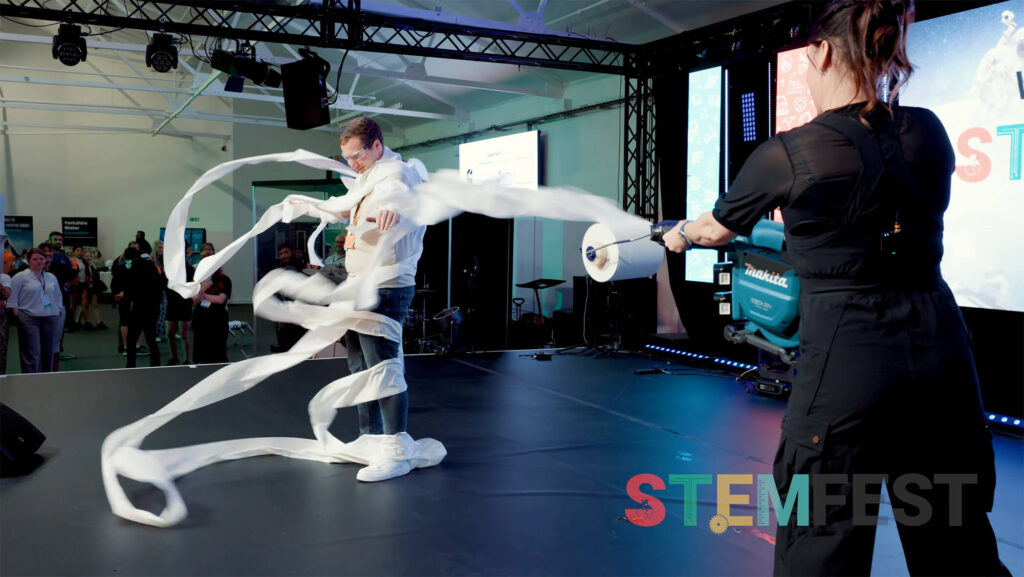
Wide shots of a busy venue can establish the scale of an event, but they don’t necessarily tell you what it feels like to be there. For me, that comes from the smaller moments: a reaction to an experiment, a conversation with an exhibitor, someone trying something for the first time or the expressions of a group completely absorbed in an activity.
Those moments became an important part of the STEMFest film.
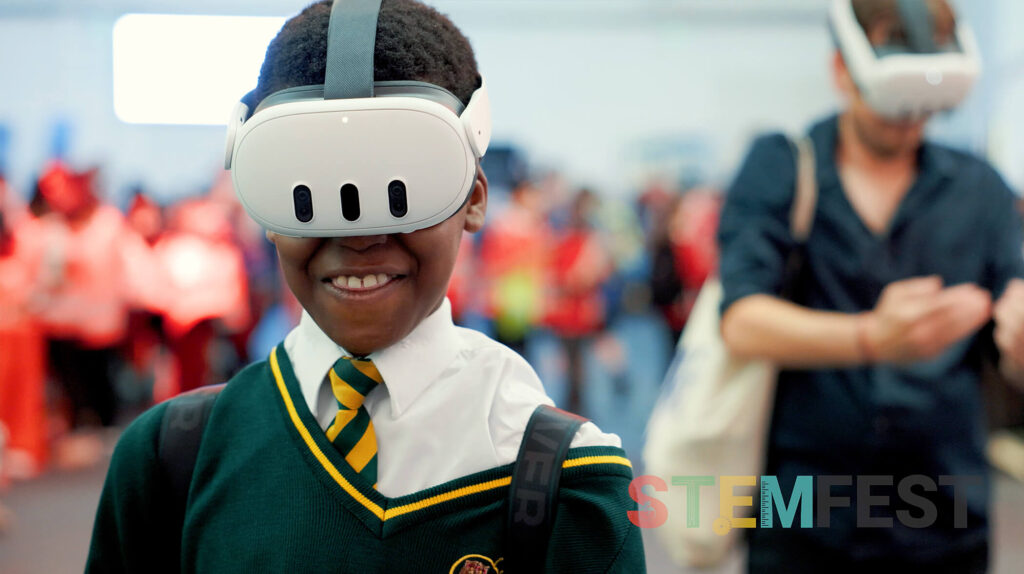

Working in a live environment means they can’t simply be recreated if you miss them. I was constantly moving around the event, looking ahead for interesting interactions and trying to anticipate where the next useful moment might happen.
At the same time, I needed to make sure I was building a sufficiently varied collection of footage to tell the wider story. That meant capturing the scale and atmosphere of STEMFest alongside the details, demonstrations, exhibitors, interactions and individual reactions that brought it to life.
With only three hours of event time available each day, there was also a need to work efficiently. Rather than trying to film everything, the challenge was to identify the moments that would contribute something to the finished story.
Working with event host Ruth Amos
For the first day I worked closely with STEMFest host Ruth Amos, engineer, inventor and co-presenter of the popular Kids Invent Stuff YouTube channel.
As well as capturing the event itself, we filmed Ruth’s pieces to camera around the venue and worked together on interviews with exhibitors and attendees. These provided the narrative elements that would ultimately help connect the wider event footage together.
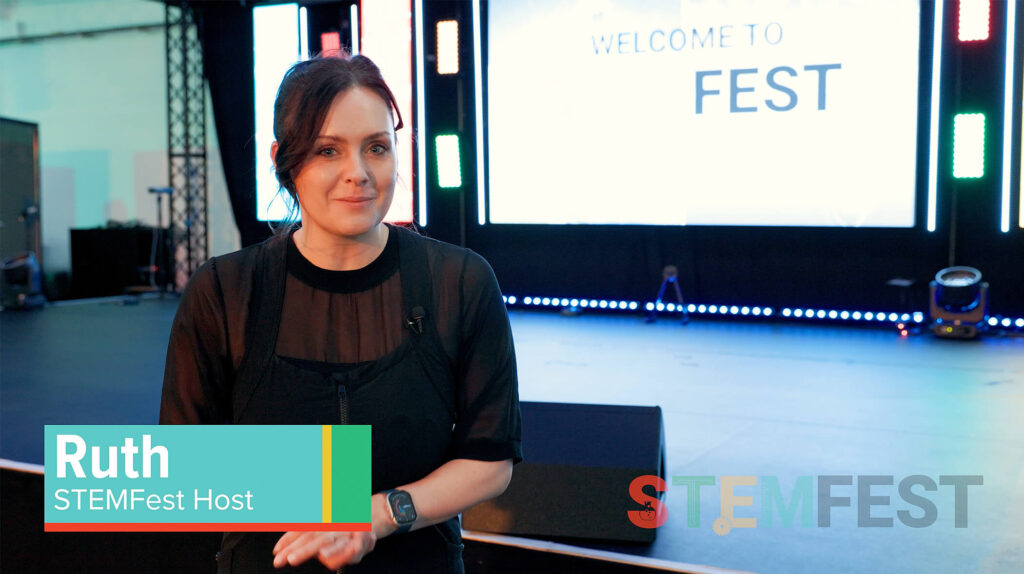

Filming this kind of content in the middle of a live event presents a very different challenge to shooting an interview in a controlled environment. There are people constantly moving around you, backgrounds are changing, ambient noise levels can be significant and the event itself doesn’t stop simply because you’re filming.
It means working quickly and being adaptable, finding suitable locations and compositions while keeping disruption to the event to an absolute minimum.
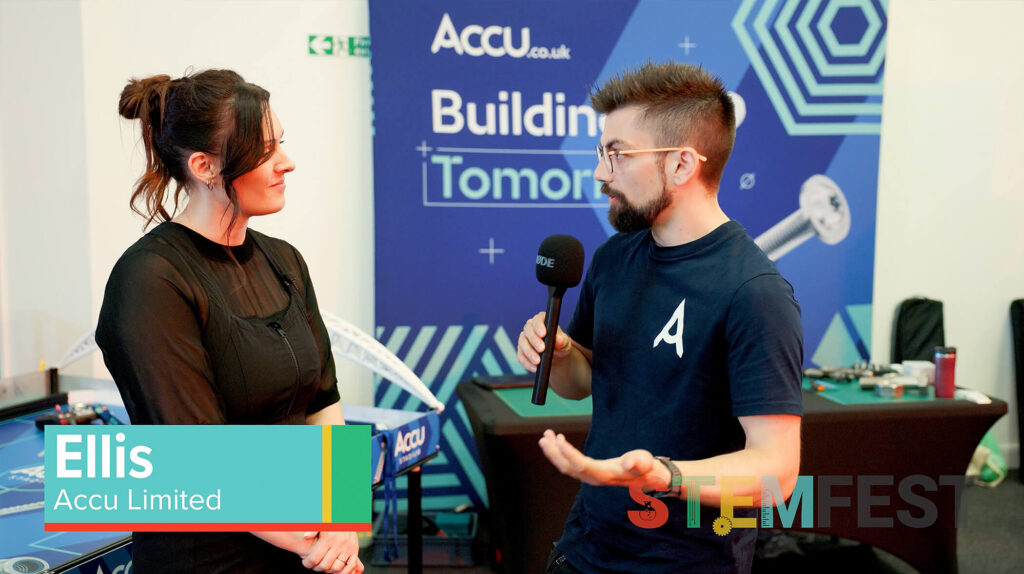
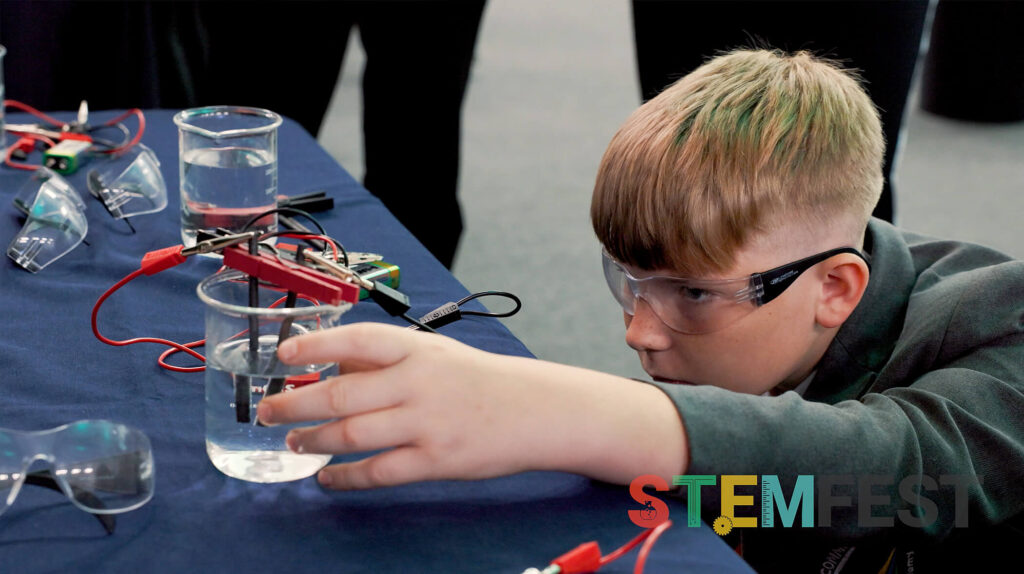
Ruth was fantastic to work with and her experience presenting on camera meant we could move quickly around the venue, capturing the pieces and interviews we needed while still responding to everything happening around us.
With just three hours available on that first day, balancing those planned elements with spontaneous event coverage was particularly important.
A different approach for day two
The second day gave me a slightly different challenge.
Having captured the main presenter content and interviews on day one, I returned to STEMFest independently to concentrate on expanding the visual coverage of the event.
By that point I already had a good understanding of the story we were trying to tell and of the footage we’d captured. That allowed me to be much more targeted about what I looked for during the second three-hour window.
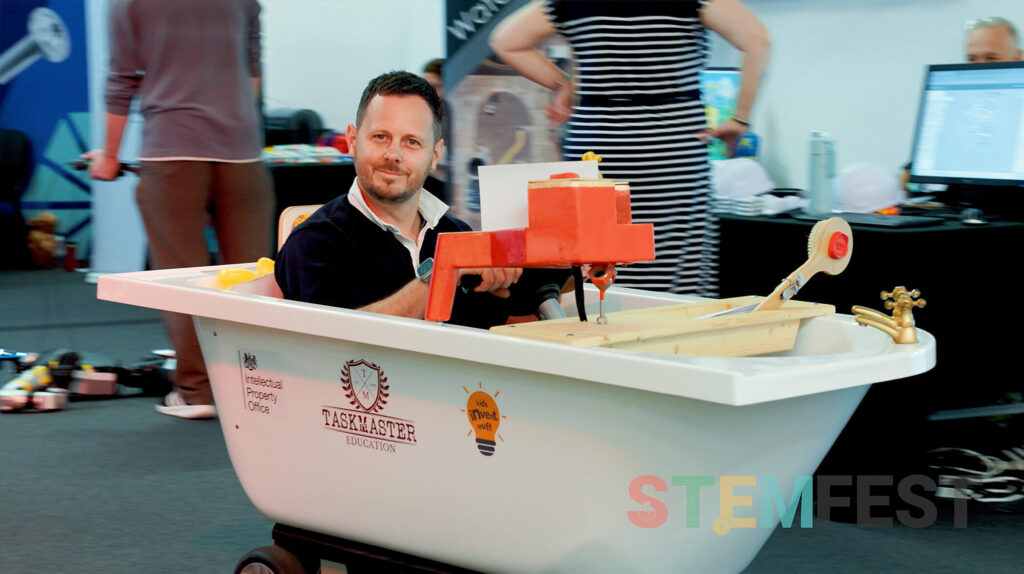

Rather than simply collecting more of the same, I could concentrate on filling gaps and increasing the variety of footage available for the edit. I spent the session looking for additional activities, interactions, reactions, details and establishing shots that would help bring the finished film together.
It’s an aspect of live event filmmaking that I particularly enjoy. You’re simultaneously thinking about what’s happening in front of the camera and how those individual moments might eventually work together in an edit.
Working independently also meant making those editorial decisions in real time. What hadn’t we seen enough of? Which parts of the event could add something different visually? Have we captured headline sponsors? Where were the strongest interactions happening? Which moments would help communicate the atmosphere to somebody who hadn’t been there?
Those decisions are as much a part of event filmmaking as operating the camera itself.
Capturing more than an event
The finished STEMFest film isn’t intended to be an exhaustive record of everything that happened over those two days. Instead, it’s about distilling the experience into a few minutes and giving somebody who wasn’t there a sense of the energy, enthusiasm and purpose behind the event.
That’s increasingly what interests me about filmmaking.
Whether I’m documenting a business, a community project or a live event, I’m always looking for the human story behind it. At STEMFest, that story was ultimately about young people being given the opportunity to explore, experiment and engage with STEM in ways that were immediate, practical and fun.
The interviews and pieces to camera give the film its structure, but it’s the expressions, interactions and spontaneous moments happening throughout the venue that give it its character.
For me, successful event coverage needs both.
Working quickly in a live environment
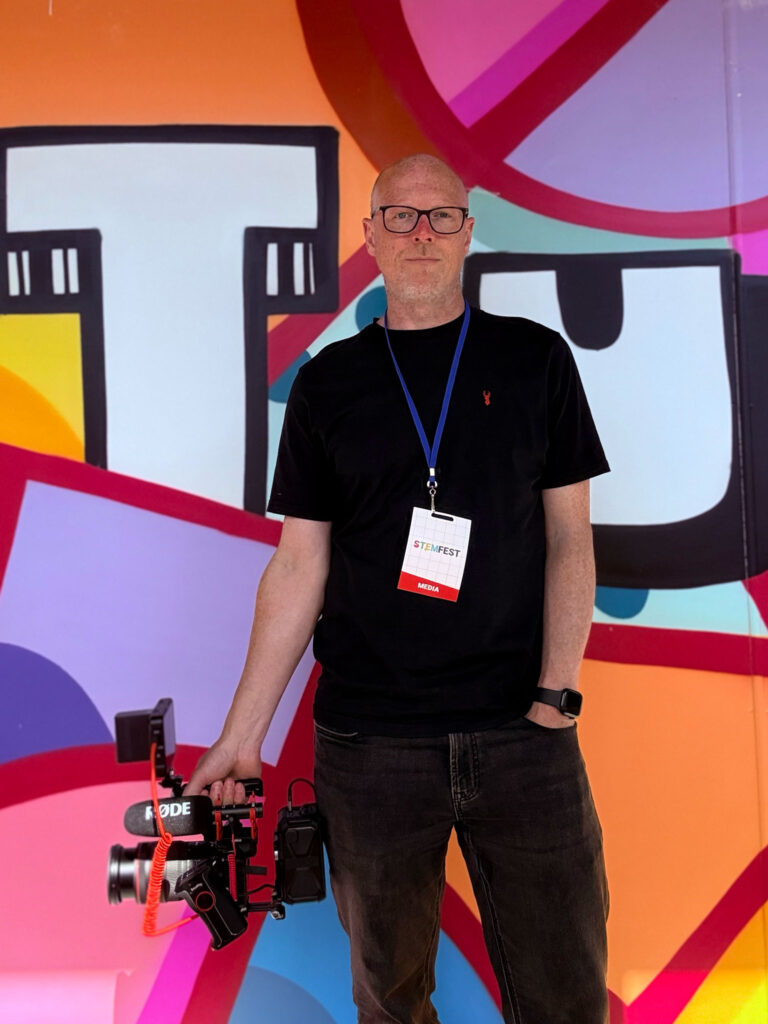
STEMFest was also a great opportunity to demonstrate the breadth of what I can provide as a solo event filmmaker.
Across a total of around six hours on location over the two days, I worked closely with a presenter and the event team, filmed interviews and pieces to camera, recorded audio in a busy live environment and captured the range of footage needed to tell the wider story.
The short filming windows made preparation and adaptability particularly important. There’s very little opportunity to stop and reassess when an event is happening around you, so you’re constantly making decisions about where to be, what to prioritise and when you’ve captured enough of something to move on.
Working solo also allows me to remain relatively unobtrusive. At an event where genuine reactions and interactions are such an important part of the story, being able to move quickly without a large production footprint can be a real advantage.
It also means I can respond immediately when something interesting happens rather than being tied to a rigid shot list or production setup.
Telling the story of a live event
For me, the aim of event videography isn’t simply to prove that an event happened.
It’s to capture what it felt like to be there.
That means combining the big picture with the small details, planned content with spontaneous moments and the messages an organisation wants to communicate with the genuine reactions of the people experiencing the event.
STEMFest was a great example of that approach. Six hours of filming spread across two fast-moving days ultimately provided the material for a film that captures not only what happened, but the enthusiasm and energy behind it.
And that’s exactly what I want my live event films to do.
Watch the STEMFest 2026 film below
If you’re planning a conference, exhibition, festival, awards event or other live event and are looking for professional videography in Leeds, Yorkshire or further afield, please get in touch to discuss your project.